Custom Patches in the Netherlands — Made to Your Own Design
Custom patches are fabric emblems produced from your own artwork in a chosen material, size, shape and backing. In Dutch the same product is called an embleem or a badge, and the three terms describe one item. You send a logo, select a patch type and a backing, and approve a free digital proof before production begins. We manufacture custom patches and deliver them across the Netherlands and Belgium.
DESIGN
PATCHES
What Are Custom Patches?
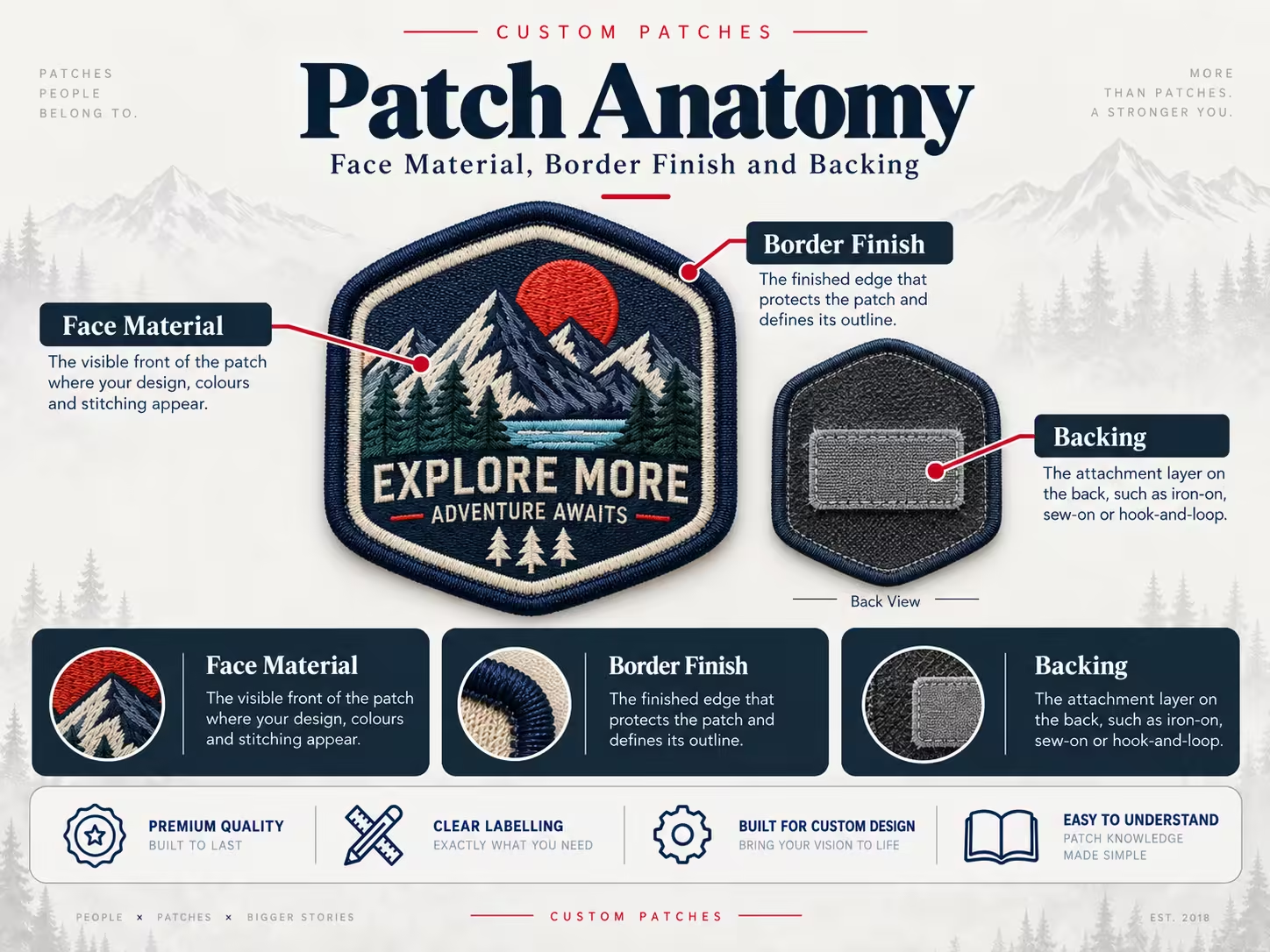
A custom patch is a finished textile emblem that carries a logo, a name, a number or an illustration. The patch consists of three parts: a face material, a border finish and a backing. The face material determines the level of detail. The border finish protects the edge from fraying. The backing determines how the patch attaches to a garment.
Custom patches differ from ready-made patches in origin, not in construction. A ready-made patch reproduces an existing design that a supplier already holds in stock. A custom patch reproduces your design, at your dimensions, in the technique you choose. Because the artwork is yours, the patch carries your brand rather than someone else’s.
Dutch buyers use three words for this product interchangeably, and search results reflect that. Patch describes the object in general. Embleem usually describes an embroidered or woven club, unit or association emblem. Badge usually describes a smaller name or function marker on a uniform. We produce all three from the same production lines, so the word you use does not change what you receive.
Every custom patch starts from artwork. A vector file in AI, EPS, PDF or SVG format produces the cleanest result, because vector paths convert directly into stitch paths or cut lines. A high-resolution PNG or JPG works as well, and our studio redraws it where the design requires it. Once the artwork is ready, the choice of patch type sets the look, the feel and the price.
Determines the level of detail the emblem holds.
Protects the edge from fraying and sets the outline.
Determines how the patch attaches to a garment.
Custom Patch Types
Six production techniques cover the whole range of custom patch work. Each technique reproduces detail differently, and each suits a different application. The comparison table below summarises the differences, and the sections that follow explain each type.
Embroidered Patches
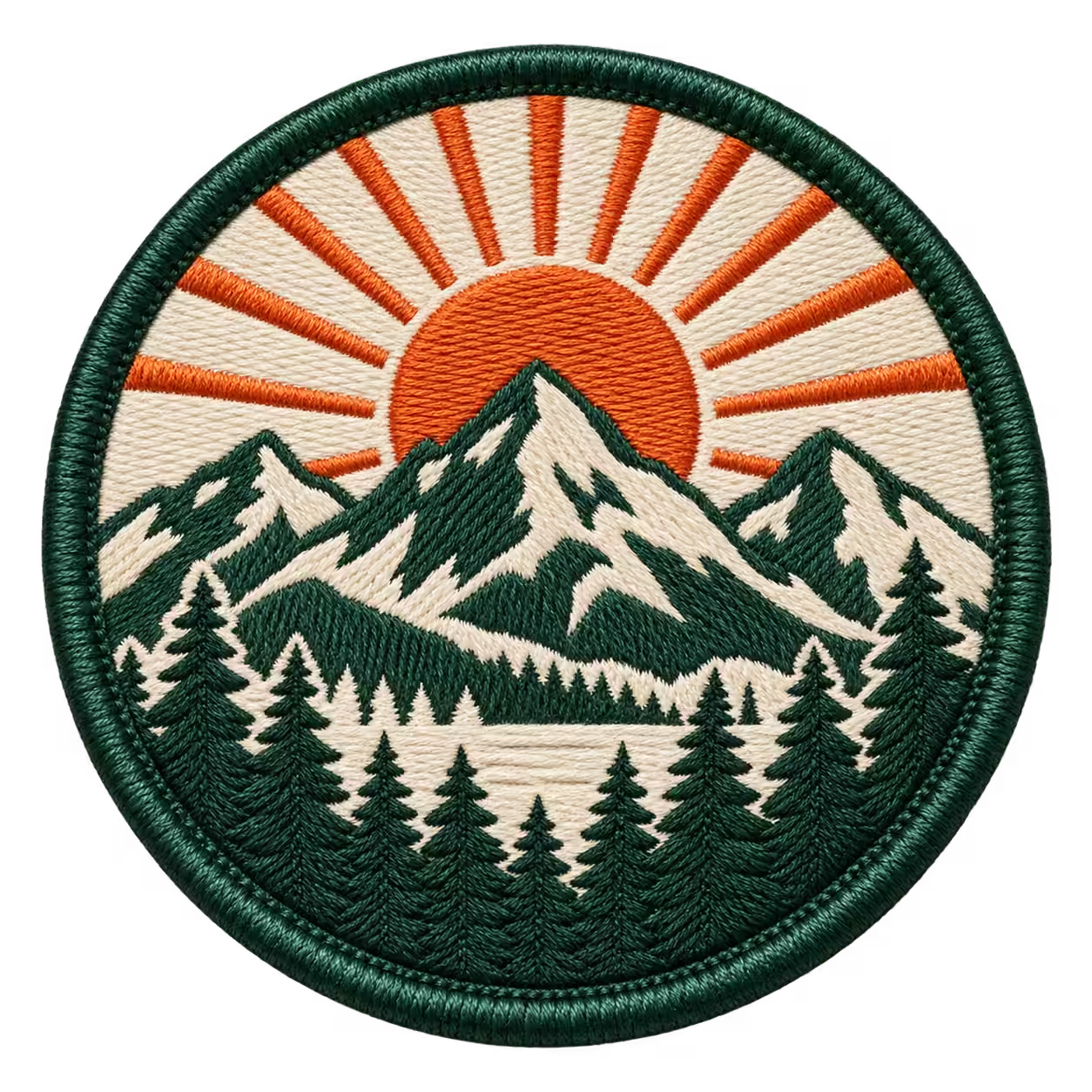
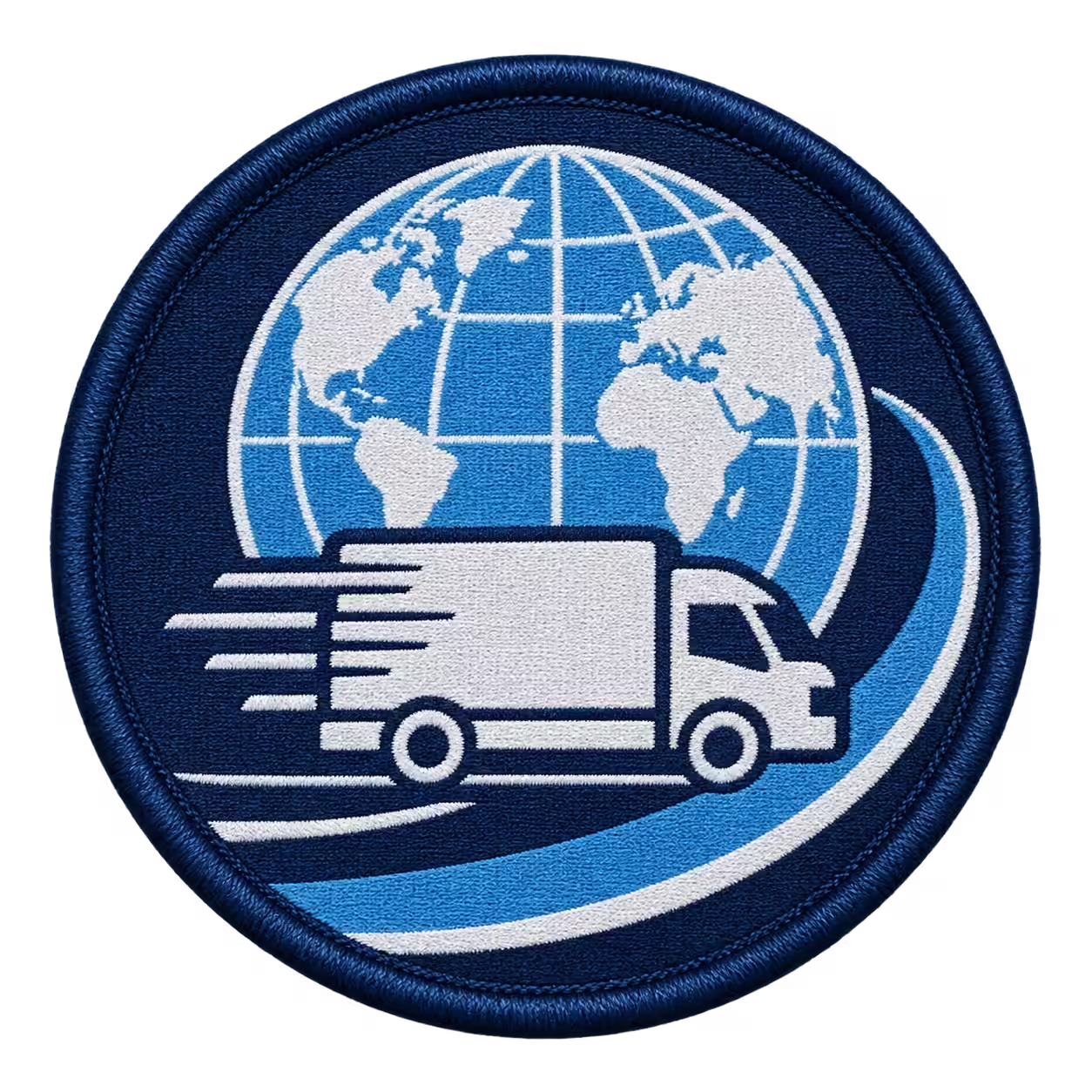
Embroidered patches use polyester thread stitched onto a twill base cloth. The stitching creates a raised, textured surface with visible thread direction. Thread coverage typically reaches 50 to 100 per cent of the patch face, and full coverage hides the twill completely. Embroidery reproduces bold shapes, block lettering and flat colour blocks accurately. Fine gradients and text below roughly 5 mm in height fall outside what thread resolves cleanly. Geborduurde emblemen remain the standard choice for clubs, uniforms and motorcycle jackets because the finish survives years of wear and repeated washing.
Woven Patches
Woven patches replace stitching with a damask weave. Fine threads interlace horizontally and vertically to form the design inside the fabric itself, rather than on top of it. The result is a thinner, flatter patch with a higher detail ceiling than embroidery. Woven construction resolves small text, thin outlines and intricate crests that thread cannot hold. Geweven patches suit detailed logos, corporate marks and any design that failed an embroidery test.
Printed and Sublimation Patches
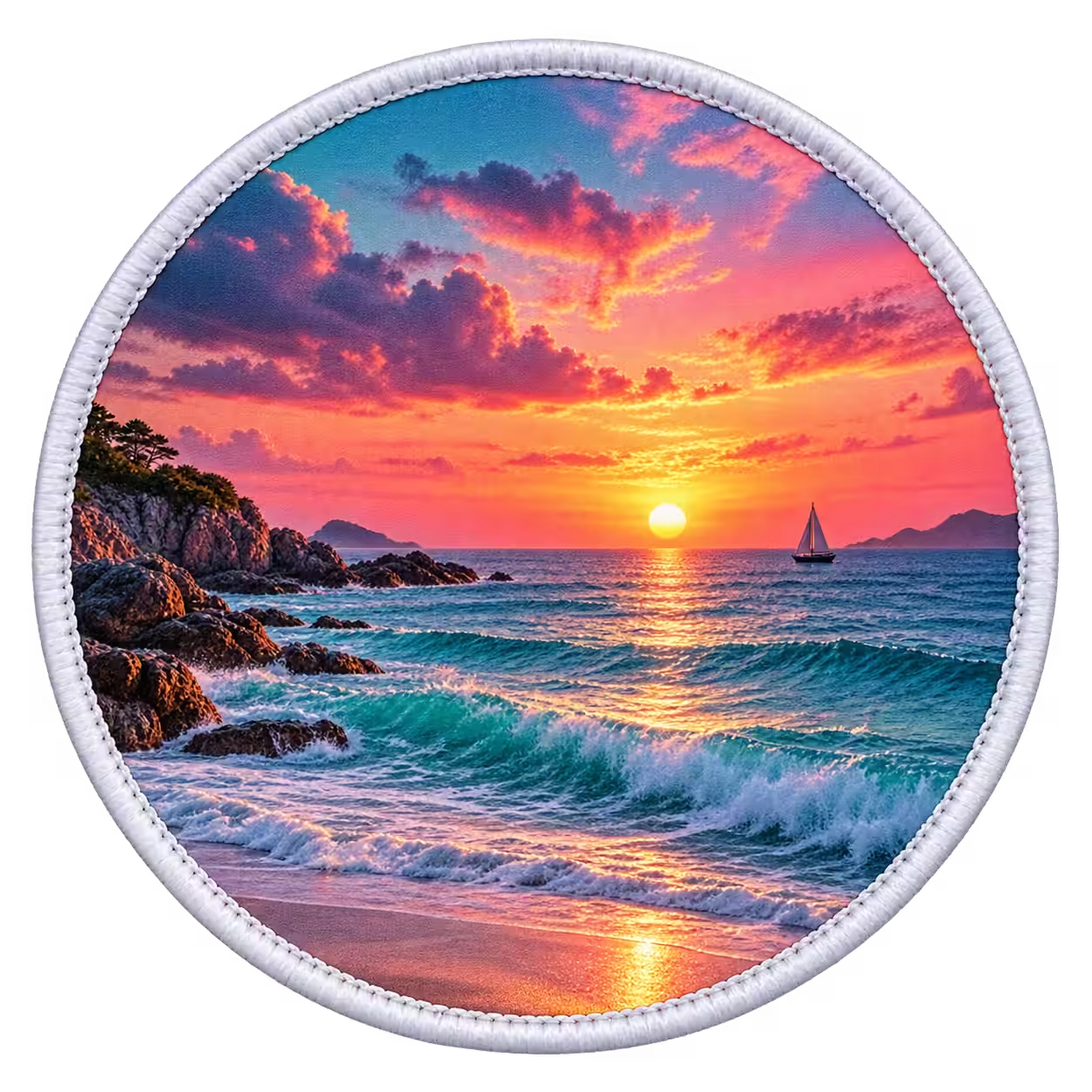
Printed patches carry artwork applied by dye sublimation onto polyester fabric. Sublimation fuses ink into the fibres, so the surface stays smooth and the colour does not sit as a layer on top. This technique reproduces photographs, gradients, shadows and unlimited colour counts. Bedrukte patches are the correct choice when a design contains colour transitions, because neither thread nor weave reproduces a gradient.
PVC and Rubber Patches
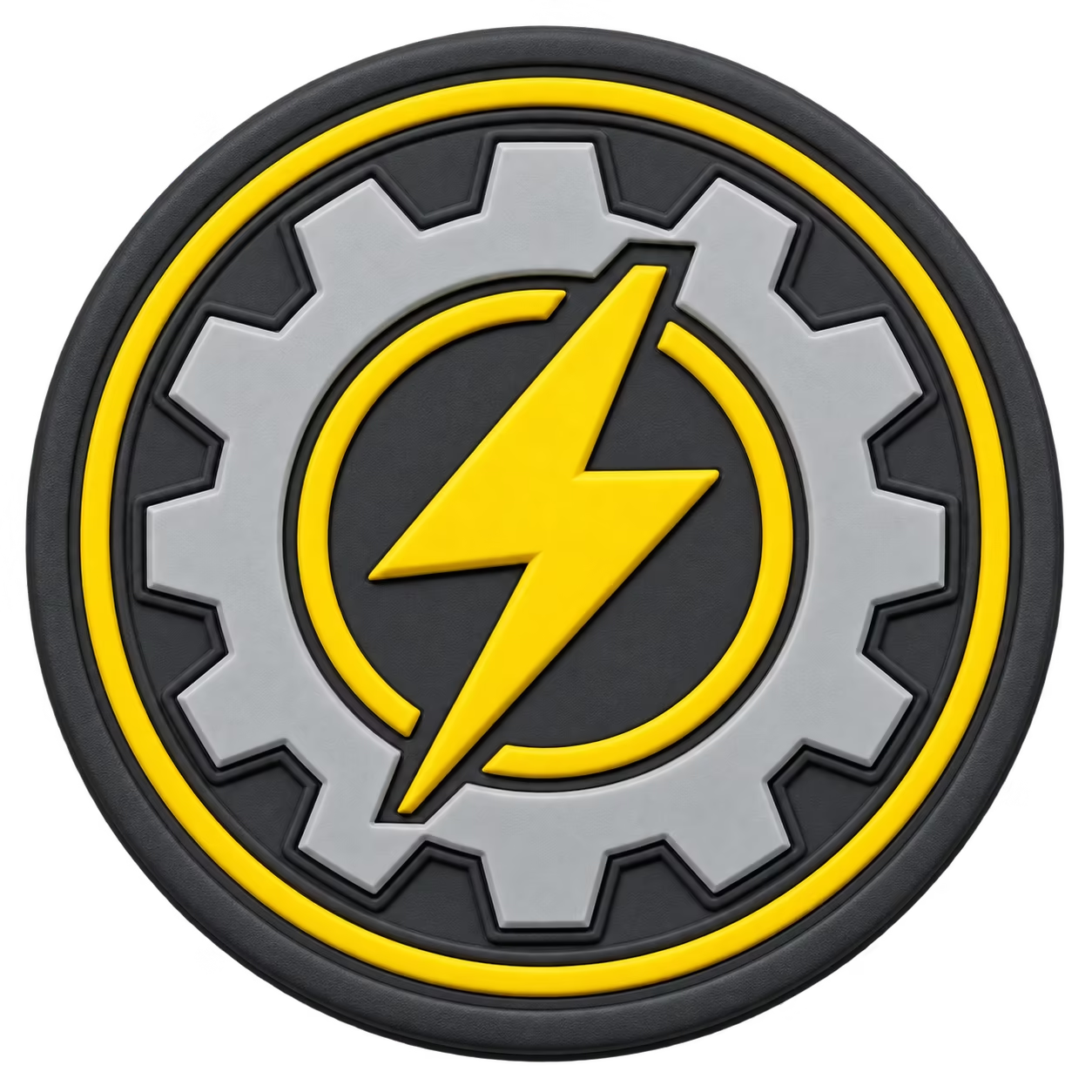
PVC patches are moulded from soft rubber rather than woven from fibre. A mould forms the design in 2D relief or 3D relief, and the material holds sharp edges and consistent colour. PVC is waterproof, UV-stable and resistant to abrasion. Airsoft teams, security firms and outdoor brands specify PVC because the patch survives conditions that degrade textile emblems.
Chenille Patches
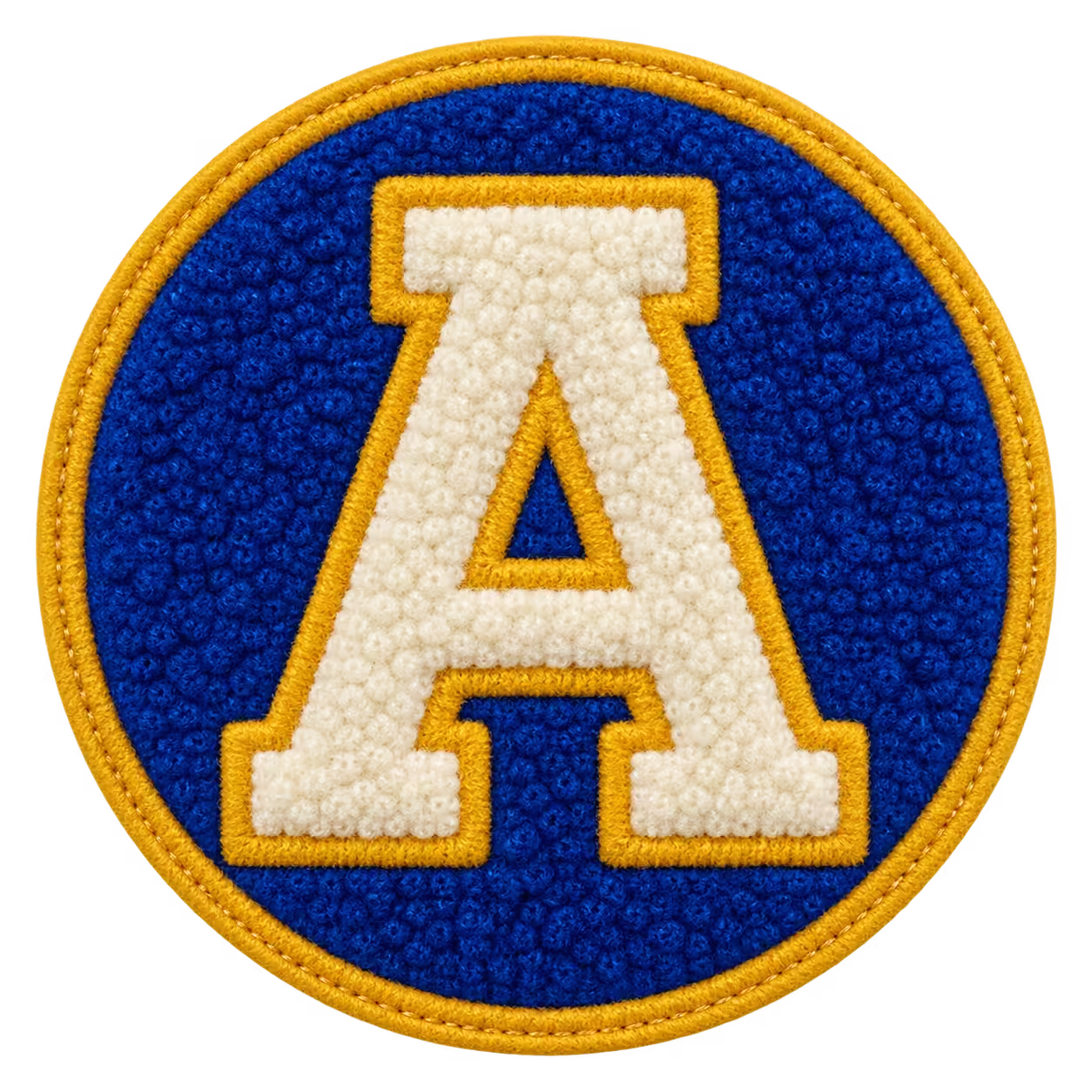
Chenille patches use looped yarn on a felt base to create a deep, raised, fluffy texture. The technique reproduces large letters, numbers and simple shapes rather than fine detail. Chenille carries a varsity and sports association, and student clubs, teams and fashion labels use it for that reason.
Leather Patches
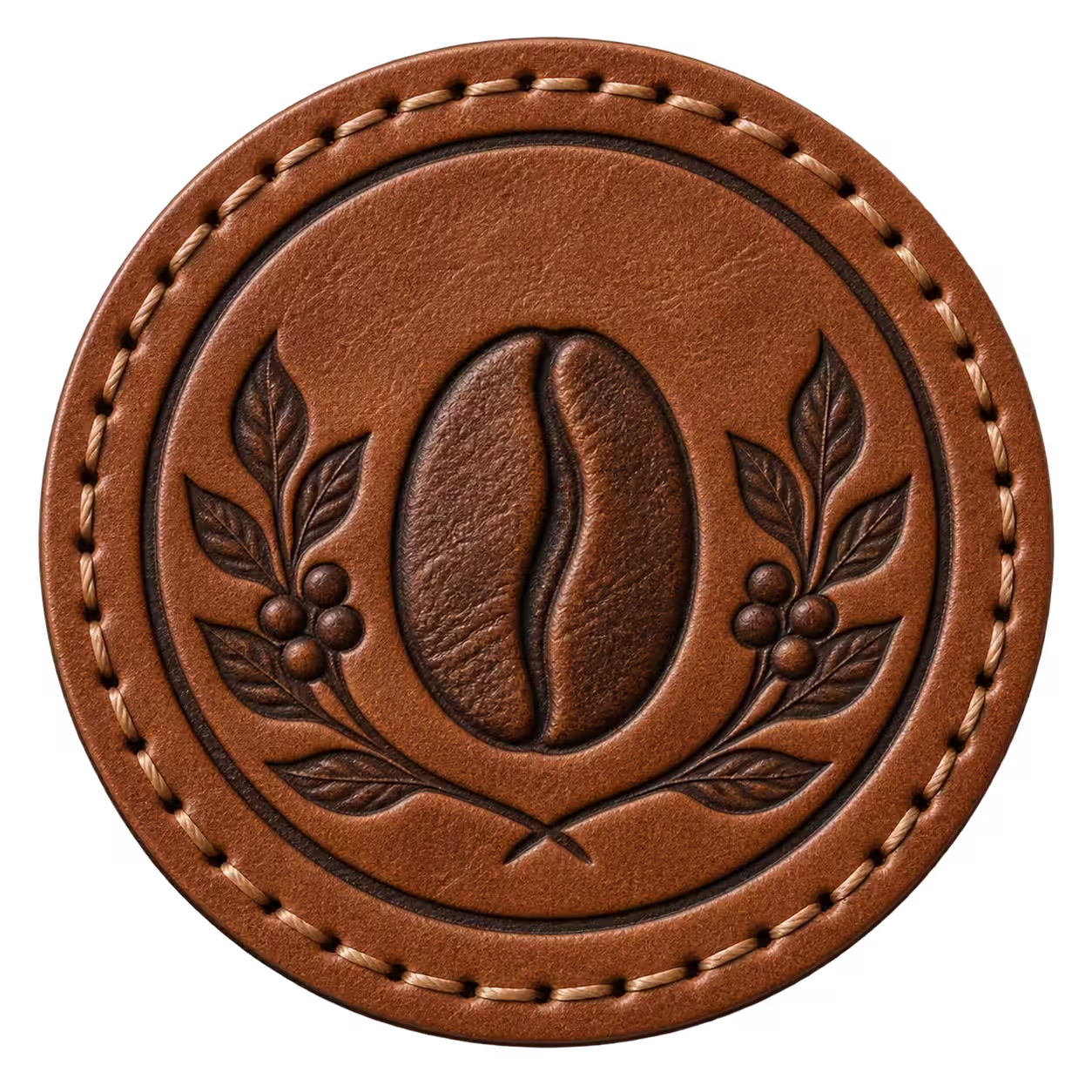
Leather patches are cut from genuine or synthetic leather and finished by embossing, debossing or laser engraving. The material gives a premium, tactile result with a matte finish. Denim brands, workwear labels and bag makers apply leather patches where a textile emblem reads as too informal.
Comparison of Custom Patch Types
| Patch type | Construction | Detail level | Texture | Best suited to |
|---|---|---|---|---|
| Embroidered | Thread on twill | Medium | Raised, stitched | Uniforms, clubs, jackets, workwear |
| Woven | Damask weave | High | Flat, smooth | Detailed logos, small text, crests |
| Printed / sublimation | Dye sublimation on polyester | Very high | Flat, smooth | Photos, gradients, full-colour artwork |
| PVC / rubber | Moulded rubber | High | Raised 2D or 3D | Airsoft, security, outdoor, tactical |
| Chenille | Looped yarn on felt | Low | Deep, fluffy | Varsity, sports teams, streetwear |
| Leather | Cut and embossed leather | Medium | Smooth, matte | Denim, bags, premium apparel |
The patch type sets the appearance of the emblem. The backing sets how it attaches, and that decision is independent of the material you have just chosen.
Backing and Attachment Options
The backing is the layer applied to the reverse of a custom patch, and it determines how the patch attaches to fabric. Four backings cover every application. The patch type and the backing are separate choices, so an embroidered patch, a woven patch and a PVC patch all accept any of the options below.
Iron-On Backing
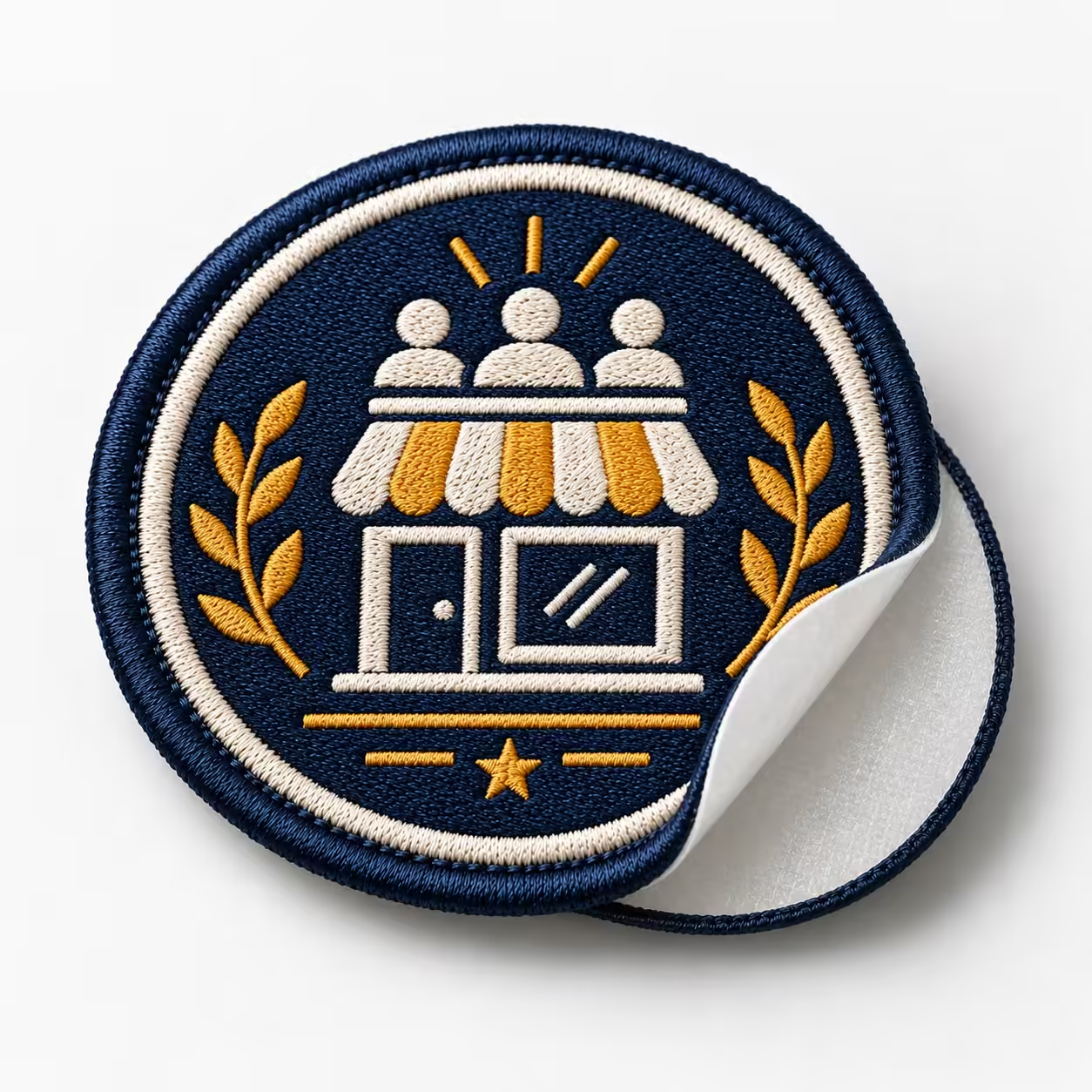
Iron-on backing is a heat-activated adhesive film bonded to the reverse of the patch. A household iron at roughly 150 °C melts the film in 30 to 45 seconds and fixes the patch to the garment. Opstrijkbare patches attach without tools, without thread and without a sewing machine, which makes them the fastest option for one-off jobs and for customers who apply patches themselves. Heat adhesive bonds reliably to cotton, denim and polycotton. It does not bond to nylon, leather, waterproof shells or any fabric that heat damages, and those materials require sewing instead.
Sew-On Backing
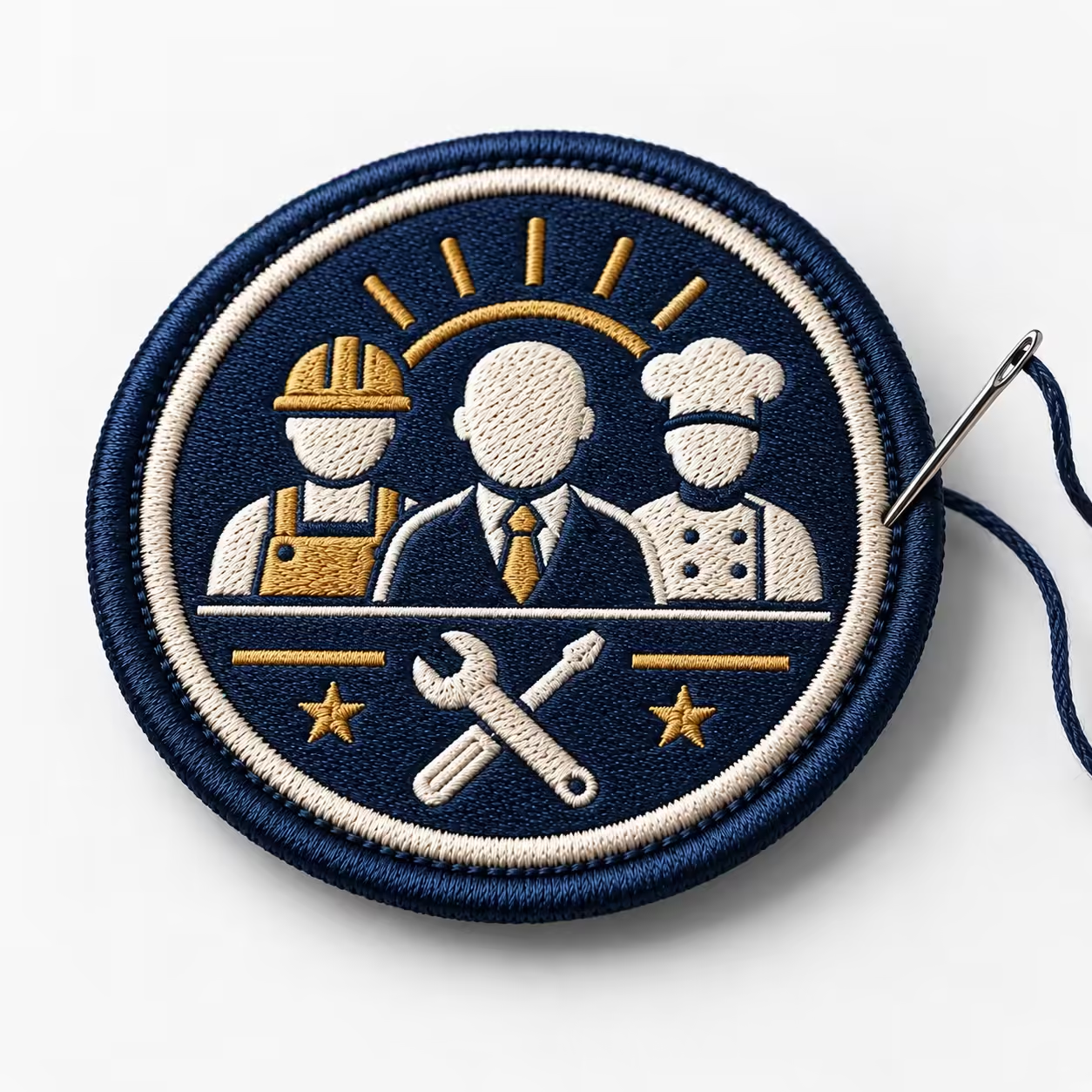
Sew-on backing is a plain finished reverse with no adhesive layer. A machine or hand stitch through the patch border fixes it permanently to the garment. Opnaaibare patches deliver the strongest attachment available, and the bond outlasts the garment in most cases. Workwear suppliers and uniform outfitters specify sew-on backing because industrial laundering at 60 °C and above eventually weakens any adhesive. Many buyers combine both layers: heat seal positions the patch, and a stitched border secures it.
Hook-and-Loop Backing
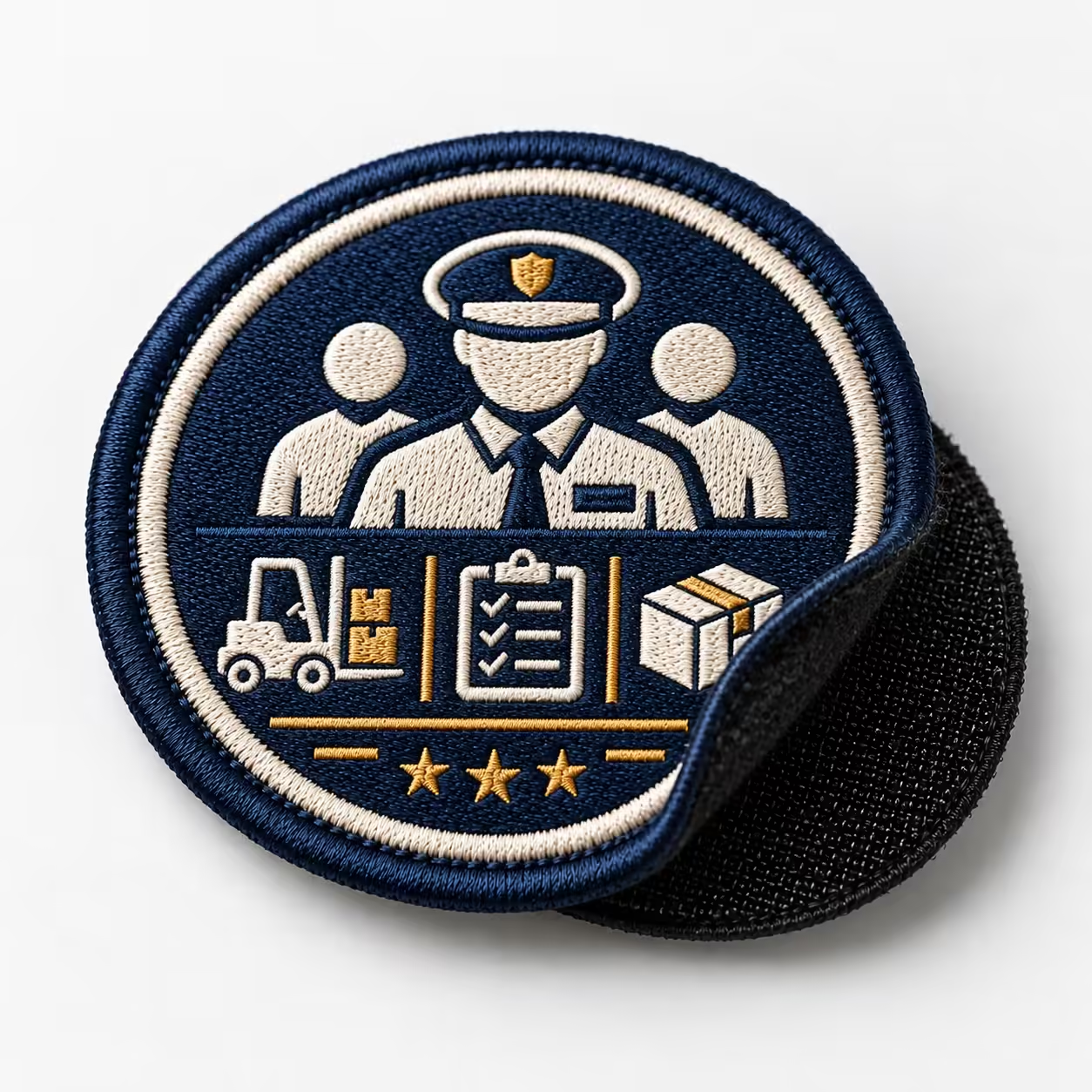
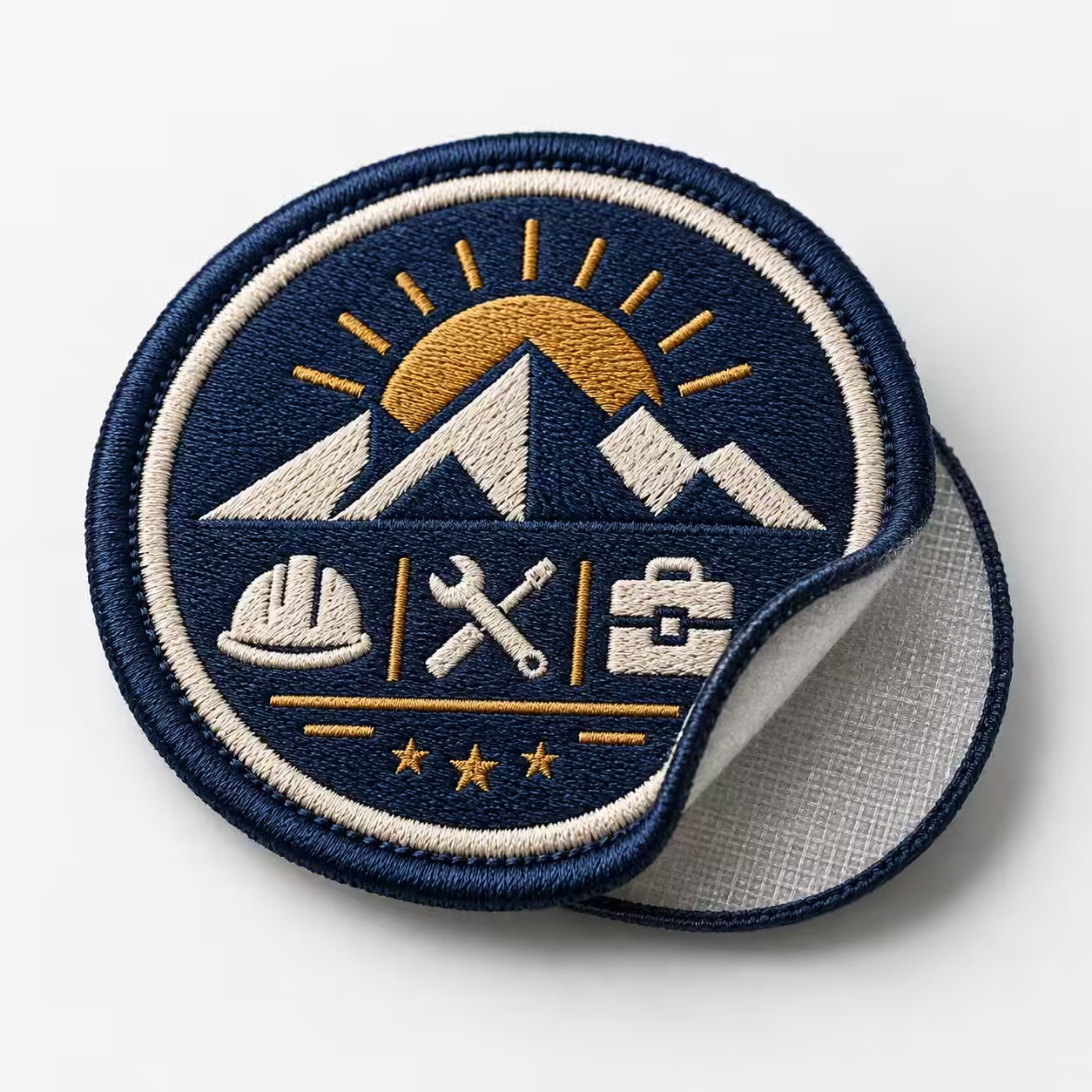
Hook-and-loop backing, known in the Netherlands as klittenband and internationally as Velcro, attaches the hook half to the patch reverse. The loop half is sewn onto the garment, and the patch then detaches and reattaches without tools. Removable emblems matter wherever one garment carries changing insignia. Airsoft teams swap unit and team identifiers between games. Security firms and brandweer units move rank and name badges between jackets. Tactical vests carry hook panels designed for exactly this purpose. We supply hook-only patches, or hook and loop as a matched pair cut to the patch outline.
Adhesive Backing
Adhesive backing is a peel-and-stick layer intended for temporary placement. Zelfklevende patches suit events, exhibitions, short promotional runs and any use where the emblem comes off within days. Adhesive does not survive washing, and it is not an alternative to heat seal or thread for permanent applications.
| Backing | Permanence | Removable | Withstands washing | Best suited to |
|---|---|---|---|---|
| Iron-on | Semi-permanent | No | Yes, at 30–40 °C | Self-application, fashion, clubs |
| Sew-on | Permanent | No | Yes, at any temperature | Workwear, uniforms, industrial laundry |
| Hook-and-loop | Reusable | Yes | Yes | Airsoft, security, emergency services, tactical gear |
| Adhesive | Temporary | Yes | No | Events, exhibitions, short campaigns |
Once the material and the backing are fixed, the remaining production variables are the outline, the dimensions and the edge finish.
Shapes, Sizes and Border Finishes
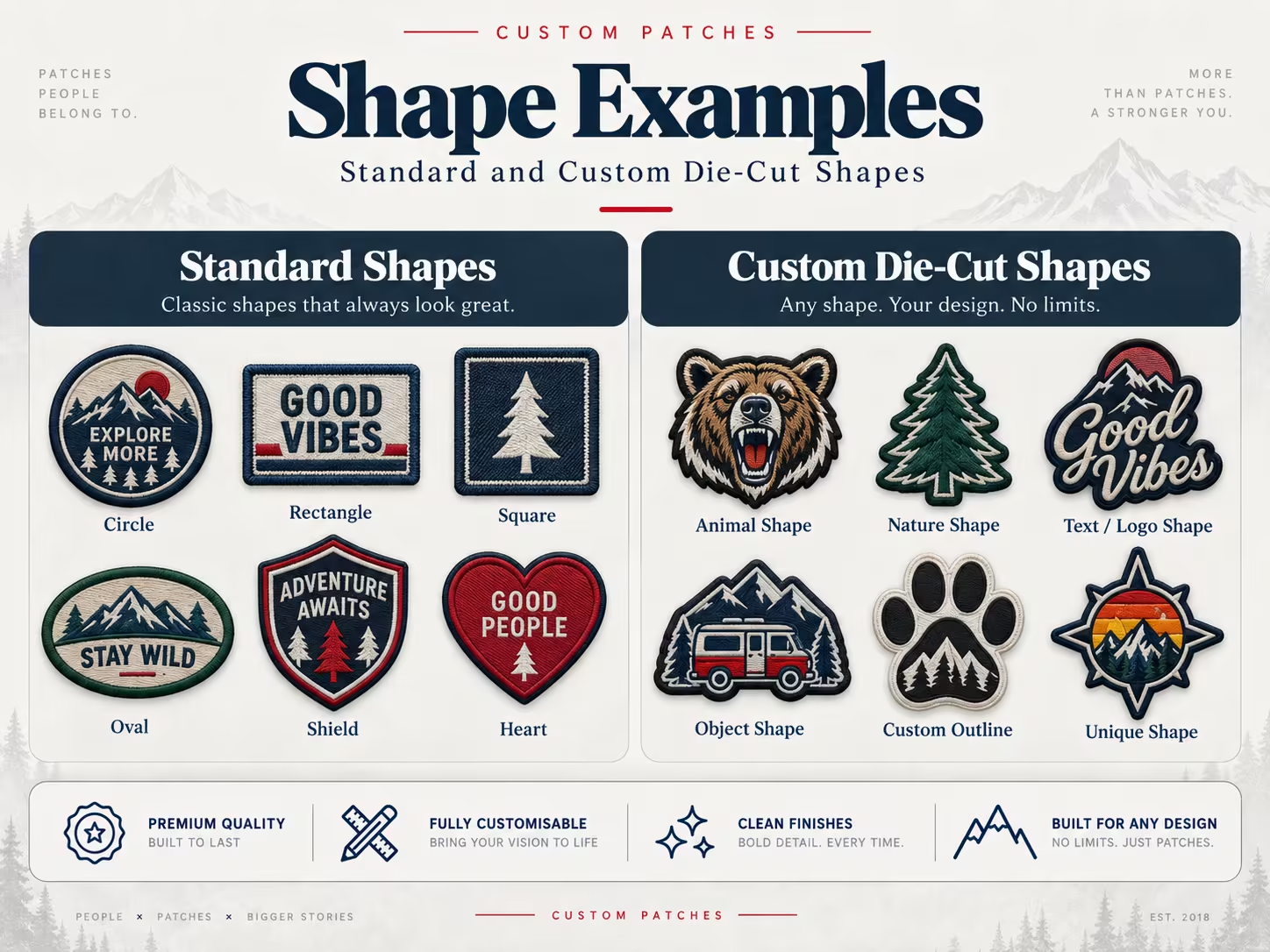
Standard and Custom Die-Cut Shapes
Standard shapes include circles, squares, rectangles, ovals and shields, and these cover most club, unit and corporate emblems. Custom shapes follow the exact contour of your artwork, so a logo, a character, a wordmark or an irregular crest becomes the outline of the patch itself. A die-cut contour costs no more than a standard shape in most techniques, because the cutting process is identical.
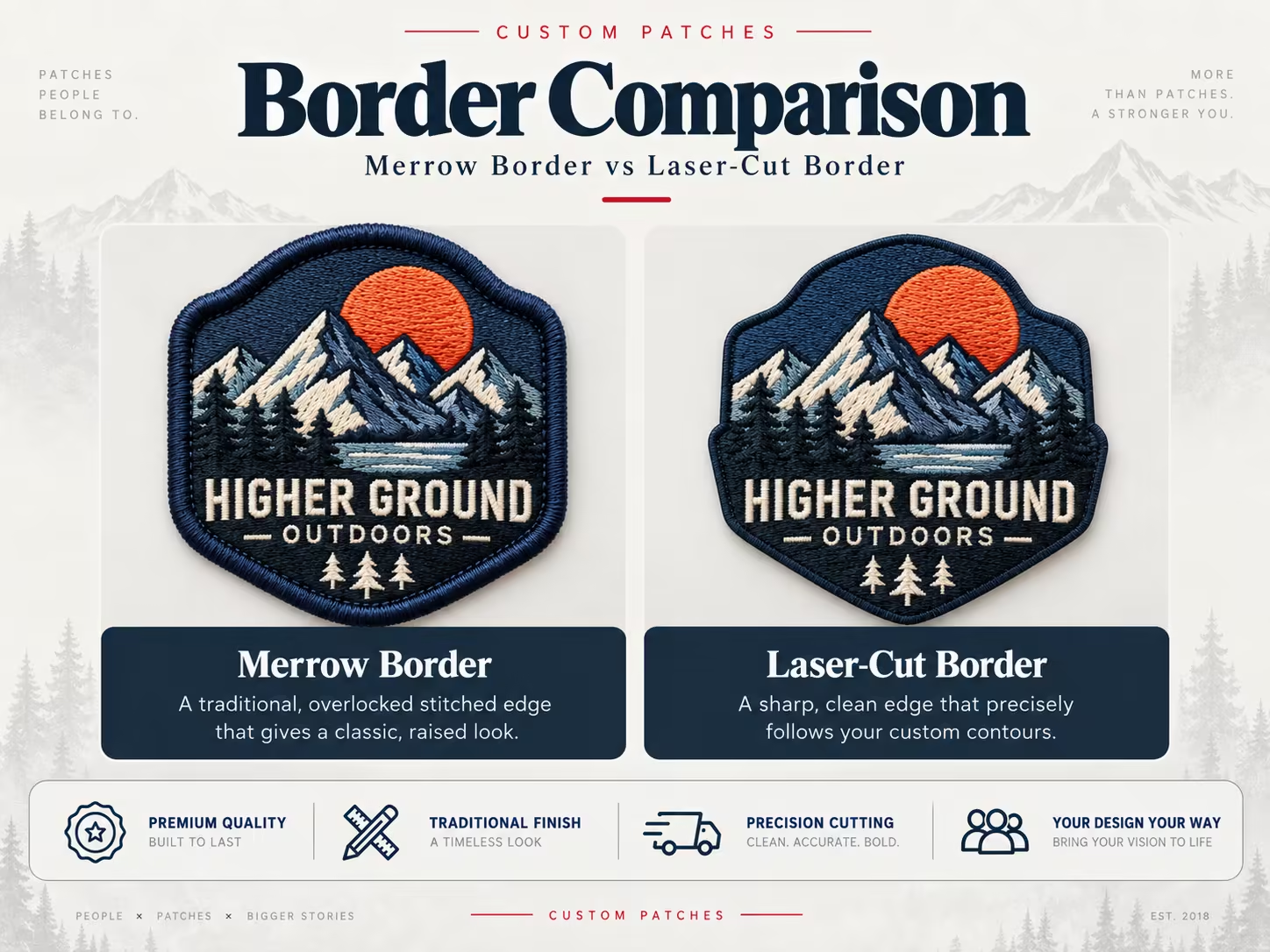
Merrow Border and Laser-Cut Border
A merrow border is an overlocked thread edge stitched around the patch perimeter, and it produces the raised rope-like rim associated with traditional emblems. Merrow finishing applies to round, oval, square and shield outlines. It does not follow sharp internal angles, so irregular contours require the alternative.
A laser-cut border seals the edge by melting the polyester fibres as the laser cuts. Laser cutting follows any outline at any angle and leaves a flat, clean rim with no added thickness. Irregular and die-cut patches therefore take a laser-cut edge as standard.
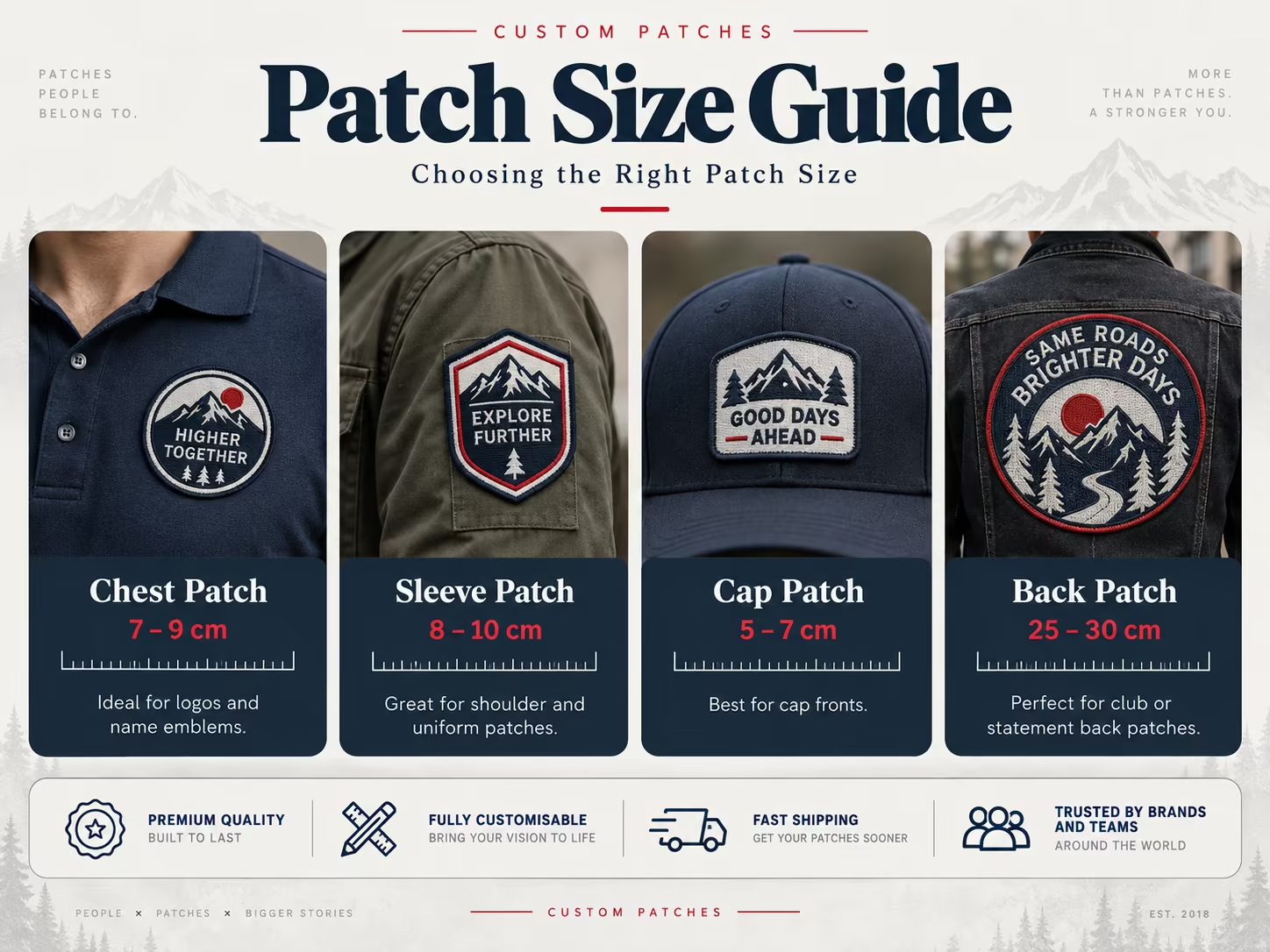
Choosing the Right Patch Size
Patch size is measured as the average of width and height, and that average determines the price band. Dimensions are specified in centimetres in the Netherlands, with inches used only for export orders. The table below lists the sizes that most orders fall into.
Text height drives legibility more than overall size. Embroidered lettering requires a minimum height of roughly 5 mm to remain readable, and designs with smaller text move to woven or printed production instead.
| Placement | Typical size | Notes |
|---|---|---|
| Chest or breast emblem | 7–9 cm | Standard company and club position |
| Sleeve or shoulder patch | 8–10 cm | Common on uniforms and workwear |
| Cap or beanie front | 5–7 cm | Limited height on structured caps |
| Bag, cap or small name badge | 4–6 cm | Minimum legible text height is 5 mm |
| Jacket back patch | 25–30 cm | Motorcycle clubs and band merchandise |
How to Order Custom Patches
Five steps take an order from artwork to delivery.
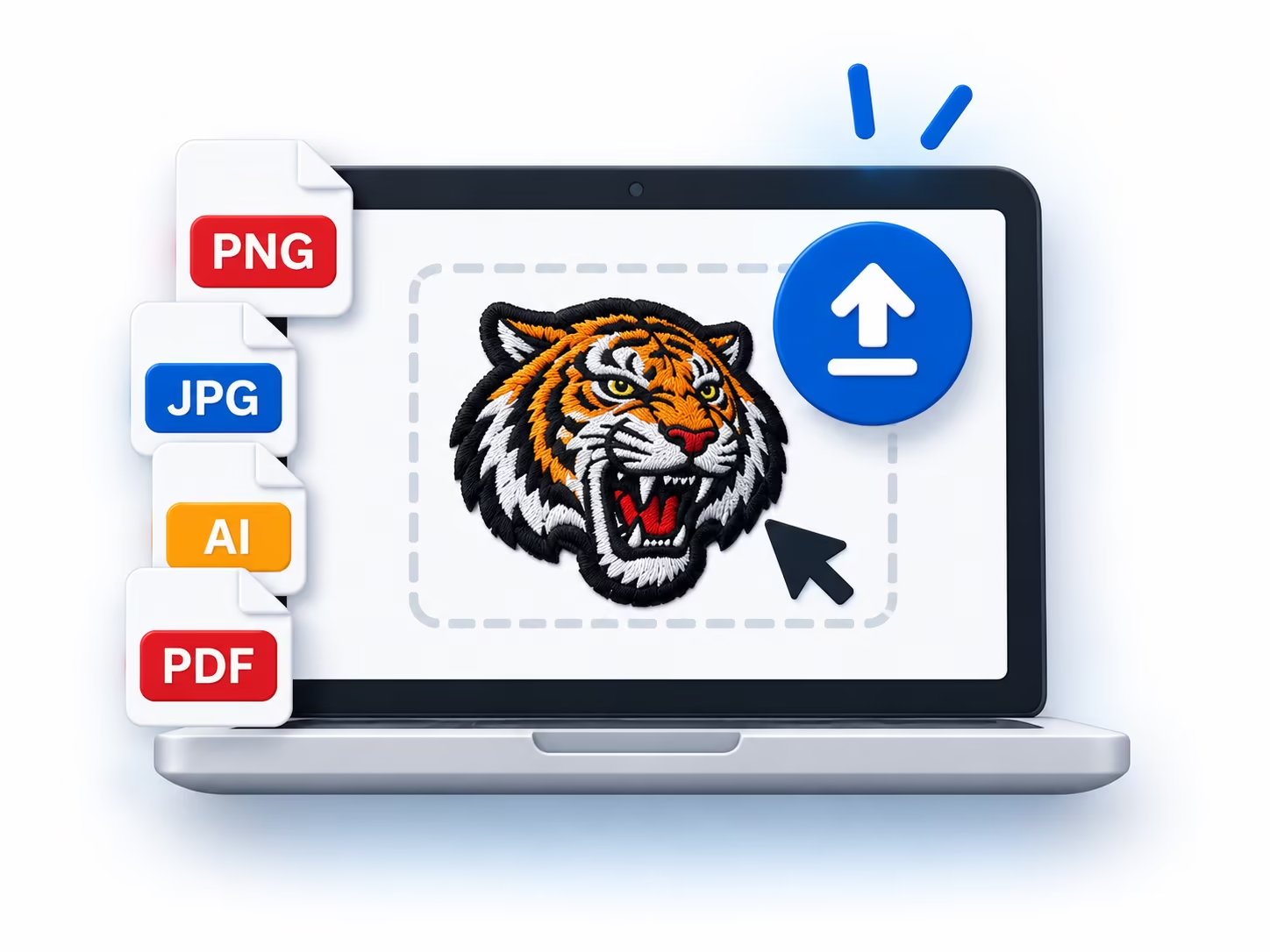
Send your artwork.
Upload a vector file in AI, EPS, PDF or SVG format, or a high-resolution PNG or JPG. Include your preferred patch type, backing, quantity and size in centimetres.

Receive your quote.
Our team reviews the artwork, confirms the technique suits the design and returns a price within 24 working hours.
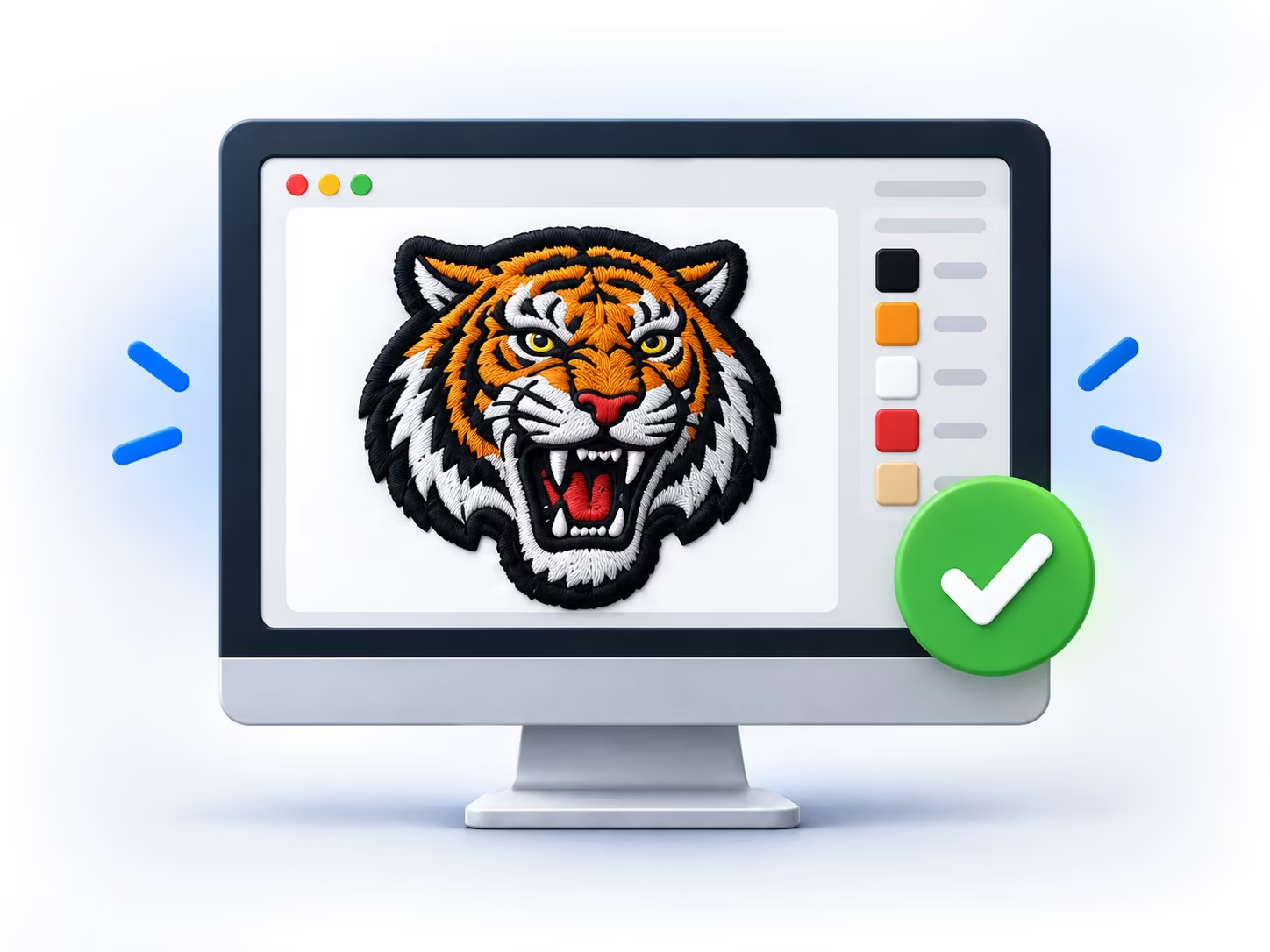
Approve the digital proof.
We digitise the artwork into a production file and send a visual proof showing the finished patch with its border and backing. Request changes until the proof is correct. Production starts only after you approve it.
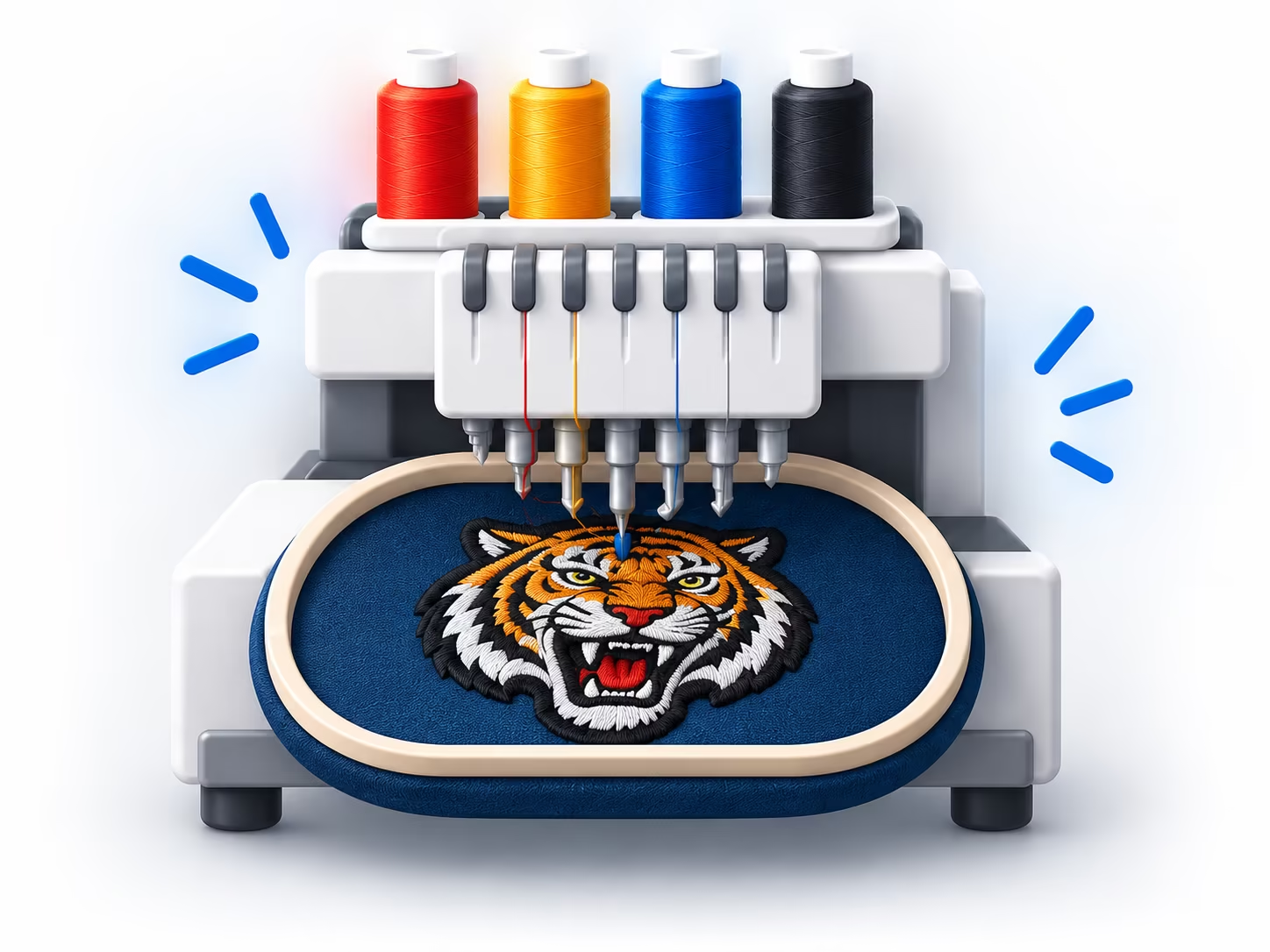
Production.
Your patches are manufactured to the approved proof and inspected before packing.
Delivery.
Your order ships to your address in the Netherlands or Belgium with tracking.
No order enters production without an approved proof, which removes the risk of receiving patches that do not match your expectation.
Send your artworkCustom Patch Pricing and Minimum Order
Our minimum order quantity is 10 pieces. Four factors set the unit price of a custom patch:
Unit price falls as volume rises, because setup is a fixed cost spread across the run.
Larger patches consume more thread, more base material and more machine time.
PVC moulding and chenille cost more per unit than embroidery at equivalent sizes. Woven and printed production sit close to embroidered pricing.
Hook-and-loop and heat-seal layers add a small cost per piece. Plain sew-on backing adds nothing.
Digitising is included at no charge, and there is no separate setup fee. All prices are quoted excluding 21% BTW. Full price bands for every technique and quantity are listed on our custom patch pricing page.
Turnaround and Delivery in the Netherlands
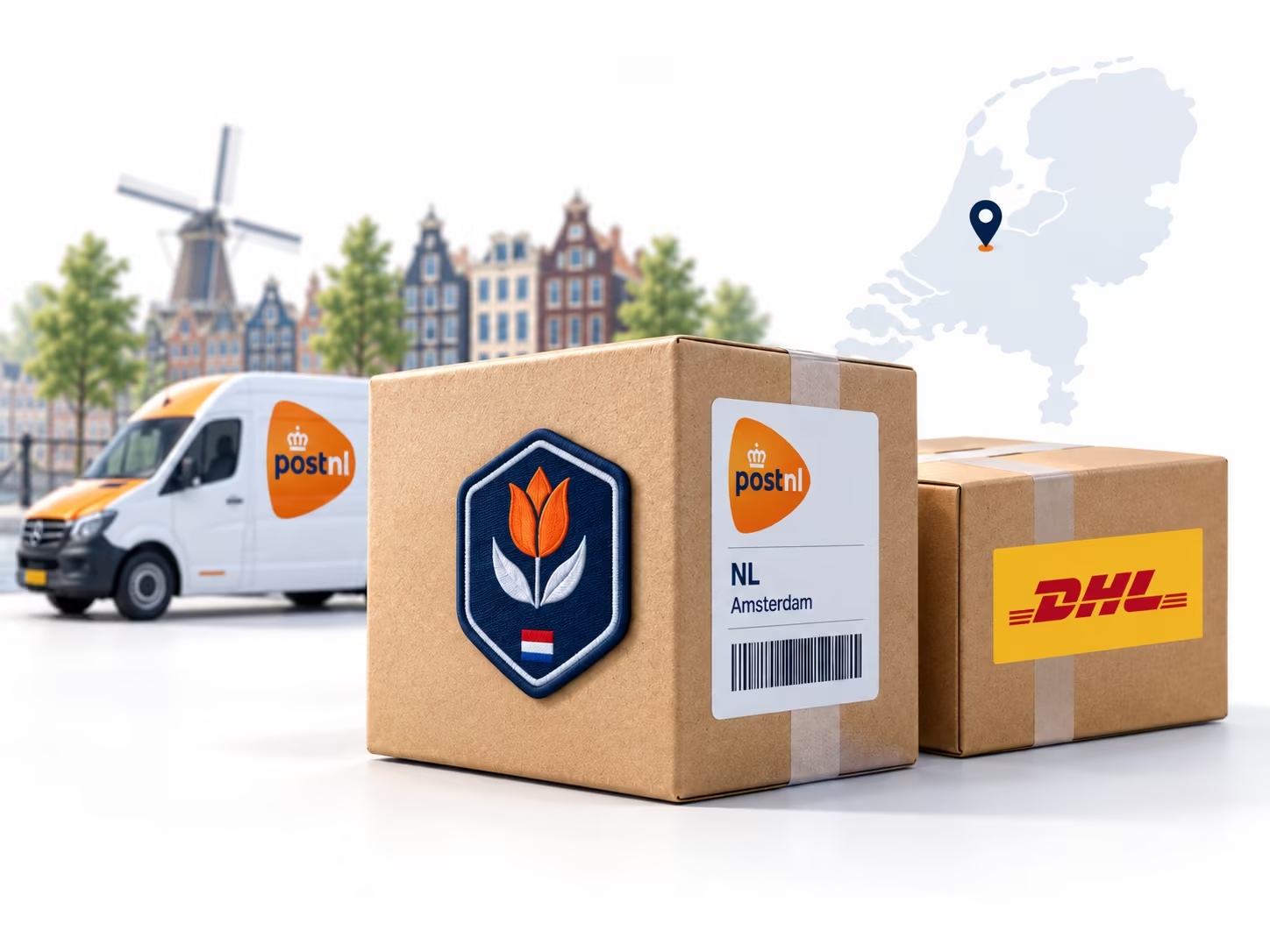
Delivery to the Netherlands, Belgium, Germany, France and the rest of the European Union takes 10 to 14 days. This is the total delivery time, including production and shipping.
Orders ship with PostNL and DHL. Every parcel carries a tracking code sent to your email address, so you can follow your order to your door.
Who Orders Custom Patches
Custom patches serve identification, branding and decoration. Six groups account for the majority of orders in the Netherlands.
Companies and Workwear
Companies apply custom patches to overalls, polos, fleeces and softshell jackets to identify staff on site. Workwear patches carry a company logo on the chest and a function or department marker on the sleeve. Sew-on backing is standard here, because industrial laundering at 60 °C degrades adhesive over repeated cycles. Uniform suppliers order patches separately from garments, which lets them apply the same emblem across mixed stock from different manufacturers.
Sports Clubs and Associations
Sports clubs and verenigingen order emblemen for kit, tracksuits, blazers and club bags. A club emblem typically combines a crest, a founding year and a club name, and embroidery reproduces that combination well at 8 to 9 cm. Associations reorder in small batches as membership changes, so a stored production file matters more than a single large run.
Airsoft, Security and Emergency Services
Airsoft teams, security firms, brandweer units and medical services need insignia that changes between shifts and operations. Hook-and-loop backing answers that requirement, because one garment then carries any patch in the wearer’s set. PVC construction suits outdoor and tactical use, since moulded rubber resists rain, mud and abrasion that degrade thread. Reflective and infrared-visible options exist for night operations — ask about availability for your specification.
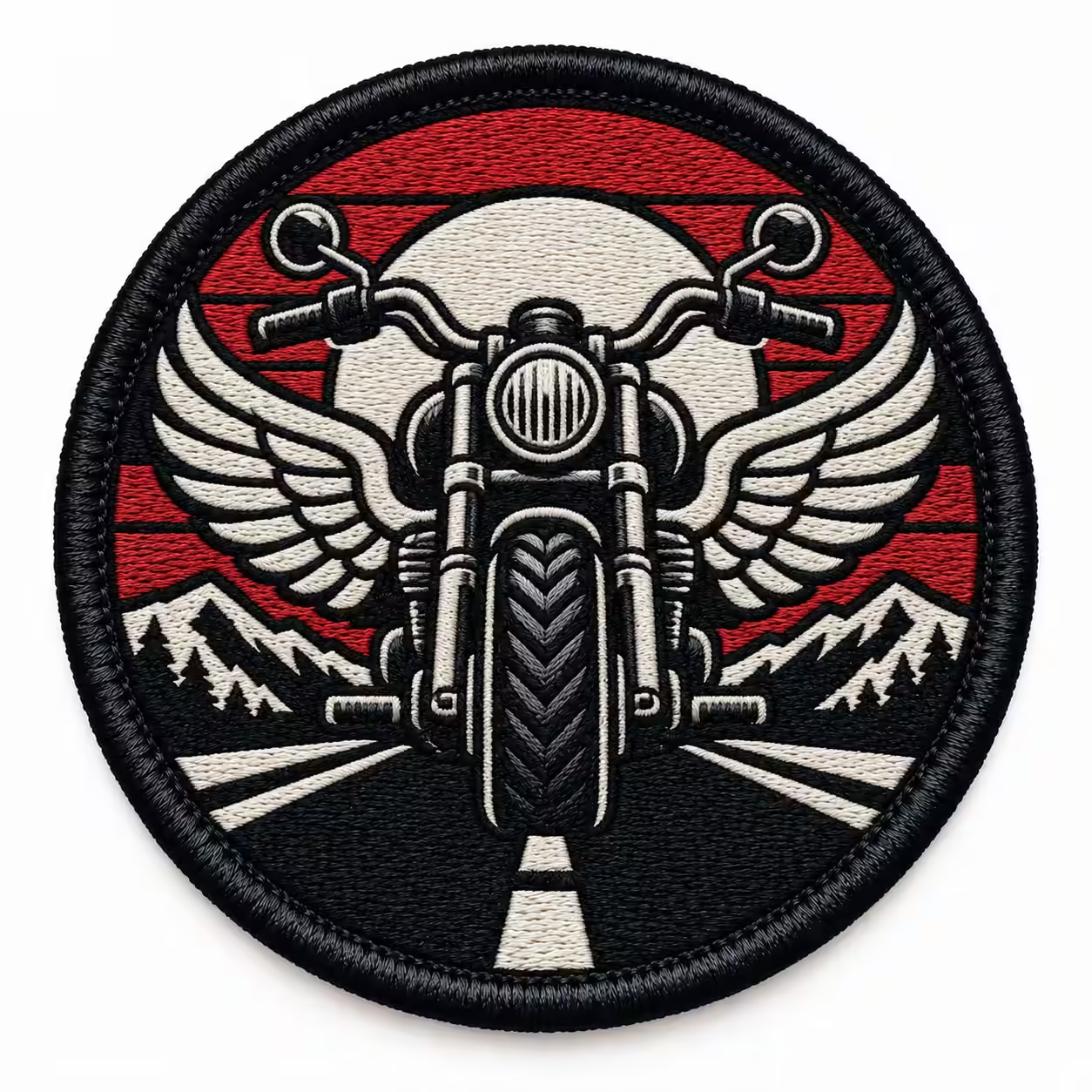
Motorcycle Clubs
Motorcycle clubs order three-piece back patches consisting of a top rocker, a centre emblem and a bottom rocker. Back patches measure 25 to 30 cm across and take sew-on backing without exception, because no adhesive holds a patch of that size on a leather or denim cut. Embroidery and chenille both suit this application.
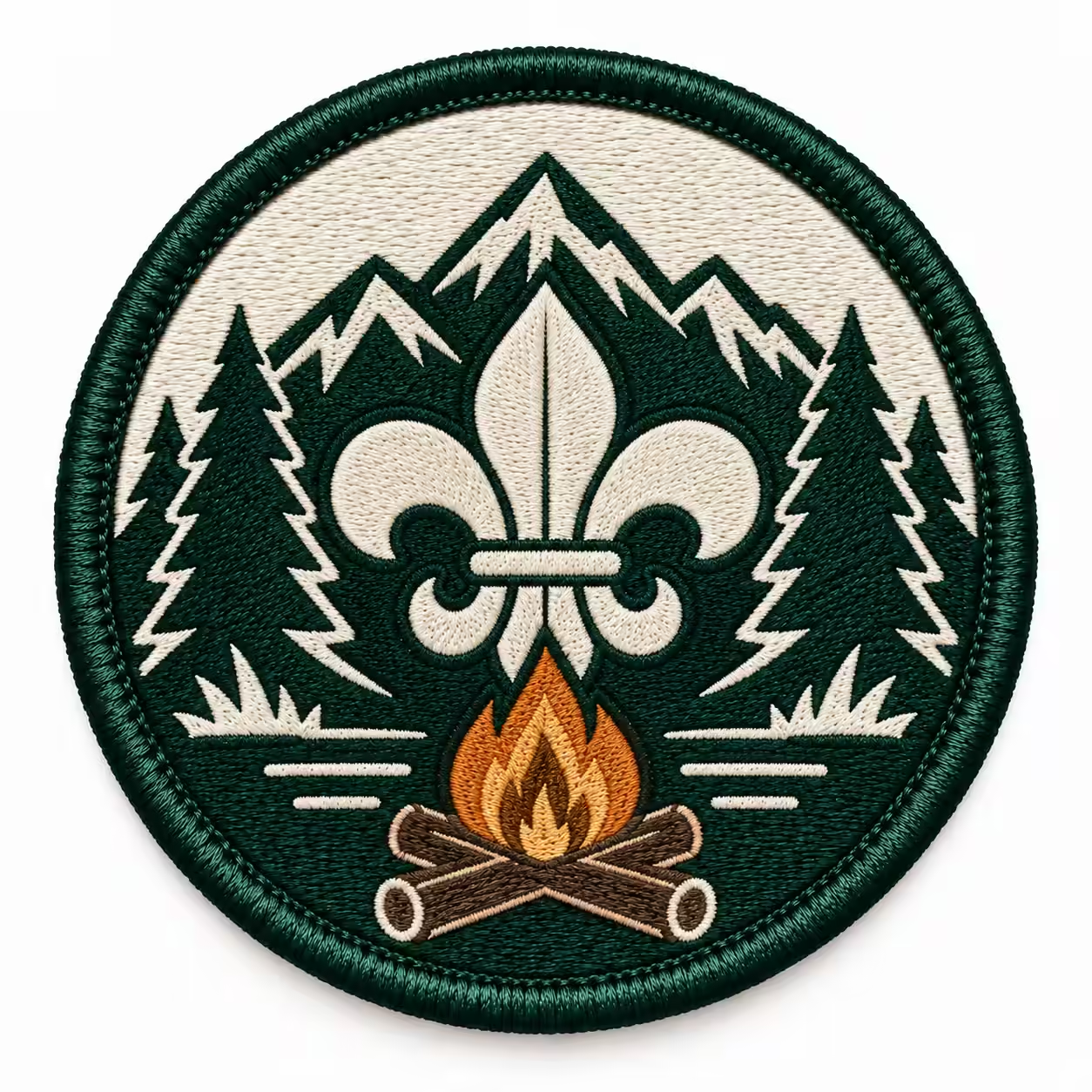
Scouting and Schools
Scouting groups, student associations and schools order badges that mark rank, achievement, group and year. These orders run high in quantity and small in size, which puts them in the lowest unit-price band. Iron-on backing suits scouting badges, since members apply them at home without a sewing machine.
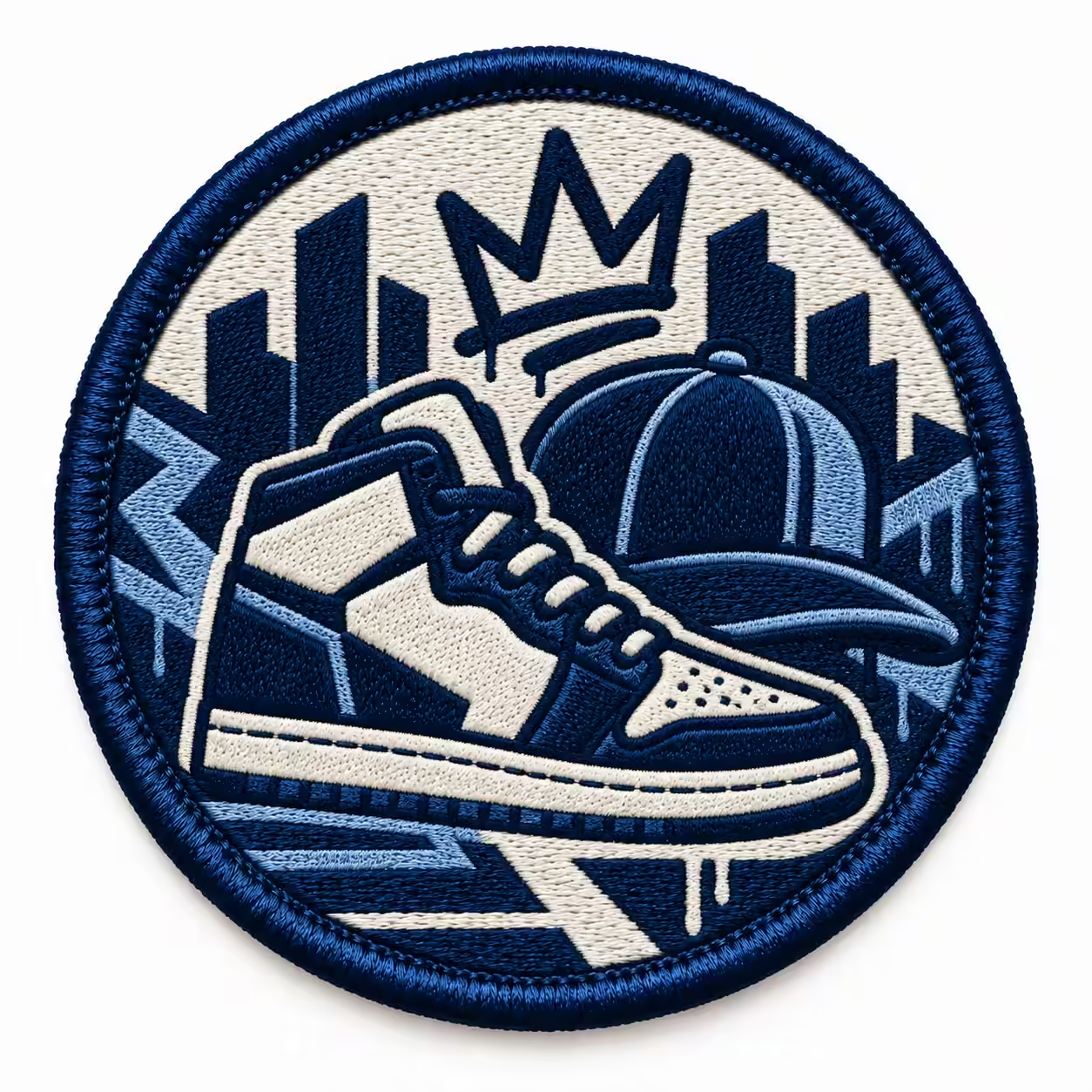
Fashion Labels and Streetwear
Fashion labels use patches as brand marks on caps, denim, workwear jackets and tote bags. Leather patches carry a premium finish for denim and bags. Chenille carries a varsity reference for streetwear. Woven patches reproduce a detailed wordmark at small sizes where embroidery loses the letterforms.
Why Order Custom Patches from Us
You see the finished patch, including border and backing, and production starts only after you approve it.
We convert your artwork into a production file at no charge, and we store that file for reorders.
Supply your PMS codes and we match thread and ink to your brand colours.
Our MOQ is 10 pieces, which covers a single team, a small club or a product test run.
[Company name], KvK [number], [city]. Invoices carry a Dutch BTW number.
[OEKO-TEX / test report status — confirm before publishing.]
A stored production file reproduces an identical patch months or years later.
What Our Customers Say
Customer feedback can help show how patch type, backing and production choices work in practice.
Frequently Asked Questions
Can I order custom patches with my own logo?
Yes. Send your logo as a vector file or a high-resolution image, and we digitise it into a production file at no charge.
Is there a minimum order quantity?
Yes. The minimum order is 10 pieces per design, and the unit price falls as the quantity rises.
Are custom patches machine washable?
Yes. Embroidered, woven and printed patches withstand machine washing at 30 to 40 °C. Sew-on backing withstands industrial laundering at 60 °C and above.
Can I get patches with klittenband backing?
Yes. We supply the hook half attached to the patch, and the matching loop half cut to the same outline on request.
Do you deliver to Belgium and Germany?
Yes. Belgian orders arrive within 10-14 working days and German orders within 10-14 working days, both with tracking.
Is there a setup or digitising fee?
No. Digitising and setup are included in the quoted unit price, and reorders from a stored file carry no additional charge.
What file format do you need for artwork?
Vector files in AI, EPS, PDF or SVG produce the cleanest result. High-resolution PNG and JPG files are accepted, and our studio redraws them where the design requires it.
How small can text on a patch be?
Embroidered text requires a minimum height of 5 mm. Designs with smaller lettering move to woven or printed production, which resolve finer detail.
Custom Patches: Summary
Three decisions define every patch order. The technique — embroidered, woven, printed, PVC, chenille or leather — controls how much detail the emblem holds and how it feels in the hand. The backing — iron-on, sew-on, hook-and-loop or adhesive — controls how the emblem meets the garment and whether it comes off again. The dimensions and the border finish control legibility and the shape of the outline.
Everything after those three decisions is process. You send artwork, we quote, you approve a proof, we produce, and the order ships to your address in the Netherlands. Send your design today and we will return a quote and a digital proof.